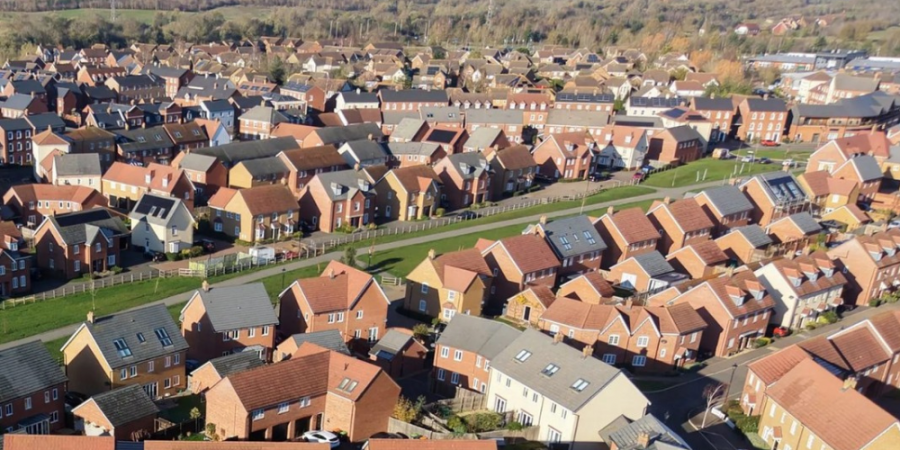
Home values and mortgage balances have changed at a pace few expected. Over the past decade, rising prices and slower payoff schedules have left many homeowners sitting on significant equity—sometimes far more than they realize. Still, a high property value alone does not equal financial strength.
Real estate and tax professionals point to specific equity benchmarks that help define when someone is truly considered “house rich,” and when that wealth may be more limited than it appears.
Understanding What “House Rich” Means
Being house rich goes beyond owning a high-priced property. The term centers on how much equity has been built and how much of a person’s overall wealth depends on that equity.
Cameron Saemann, a realtor at Second Story Realty, explained that house-rich status depends on whether equity is “siloed to the asset itself vs. a scenario where a person’s net worth consists mostly of real estate equity.” In simple terms, it matters whether the home is just one strong asset or the main source of wealth.

Freepik | Being house-rich means your home equity is your primary source of net worth.
John Ornelas, director at North Texas Tax Advisors, added another layer. A homeowner may feel financially stretched in daily life while still being house rich if home equity makes up a large share of total net worth. Cash flow and net worth do not always move together.
Aaron Perez, CEO of Sell Your San Antonio House, summarized it clearly: “Equity is your aggregate wealth.” When most wealth sits inside the property, that equity defines the financial picture.
Equity Levels That Signal House-Rich Status
Experts agree that not all equity levels carry the same weight. While building equity is always positive, certain percentages mark a shift from stable ownership to house-rich territory.
1. Around 30% equity is meaningful but does not usually qualify as house rich
2. 50% equity or higher often signals strong financial positioning
3. 60% equity is a common benchmark for being considered house rich, according to Ornelas
4. 70% equity, as noted by Perez, places a homeowner firmly in that category
Higher equity provides room to cover selling costs, absorb market swings, and fund major repairs without financial strain.
How Today’s Equity Compares to Past Decades
The typical homeowner holds more equity now than in earlier generations. Saemann pointed to rapid appreciation and limited housing supply as major drivers. Perez estimated that the average American homeowner currently holds around $300,000 in equity.
That figure, however, does not tell the full story. Equity that feels substantial in one market may offer less security in another. Ornelas noted that in high-cost states, homeowners often need far more equity before feeling financially comfortable. Market context plays a major role in how far that equity actually goes.
The Trade-Offs of Being House Rich but Cash Poor
Strong equity can look impressive on paper, yet it does not replace access to cash. Ornelas warned that homeowners with most of their wealth tied up in property may struggle to cover emergencies, repairs, or income disruptions.
Saemann explained that accessing equity usually requires selling the home or borrowing against it. Neither option is instant, and both come with costs. This gap between wealth and liquidity creates risk, even with a high net worth.
Perez emphasized the need for savings alongside equity. Without at least six months of emergency funds, homeowners may feel secure while still being financially exposed. As he put it, a solid equity profile does not prevent someone from feeling cash-strapped.
Ways to Build Home Equity More Efficiently

Freepik | Homeowners can build equity quickly by increasing payments and improving property value.
Home equity does not grow only through market gains. Several practical steps can speed up the process.
Saemann suggested making one extra mortgage payment each year or switching to bi-weekly payments. These strategies take advantage of the loan’s amortization schedule and reduce principal faster.
Ornelas highlighted additional options:
1. Property upgrades that raise appraised value
2. Refinancing to a shorter loan term when interest rates allow
Each approach increases ownership share while lowering long-term interest costs.
Keeping Finances Balanced as Equity Grows
High equity works best when paired with healthy cash reserves. Ornelas cautioned that too much wealth locked into a home becomes risky when liquidity is limited. Property value can feel reassuring until a major expense arrives.
Perez echoed this concern, noting that without enough savings, even homeowners with strong equity may struggle to manage sudden costs. A balanced approach keeps both short-term needs and long-term wealth in view.
Home equity remains a powerful wealth-building tool, yet it works best when understood clearly. Knowing the equity percentages that define true house-rich status helps homeowners separate paper gains from usable financial strength. By pairing solid equity with accessible savings and thoughtful planning, homeowners can create stability that holds up beyond market shifts.