The narrative around commercial real estate in the United States often comes down to a single point: there is too much space. Vacant offices, struggling malls, and declining suburban areas seem to support that claim. But that explanation misses a key detail. The challenge is not simply the volume of real estate—it is how that space aligns with current needs.
Many existing properties were designed for a different era—one defined by daily commutes, rigid office schedules, and retail focused on transactions rather than experience. Since then, the way people live and work has evolved. That shift has created a mismatch between what is built and what is now in demand.
Understanding this gap helps explain current challenges and points toward future opportunities.
Demand for Space Still Exists
Despite common assumptions, demand for physical space remains. Travel, shopping, dining, and entertainment activities all indicate that people still value in-person experiences.
What has changed is the role those spaces play.
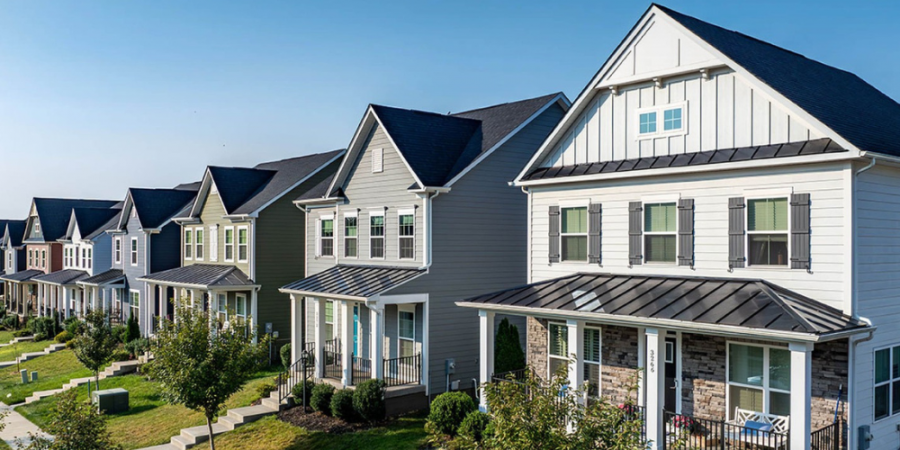
Consumers now seek environments that connect with their daily routines. Walkability, accessibility, and shared community areas have become more important than size.
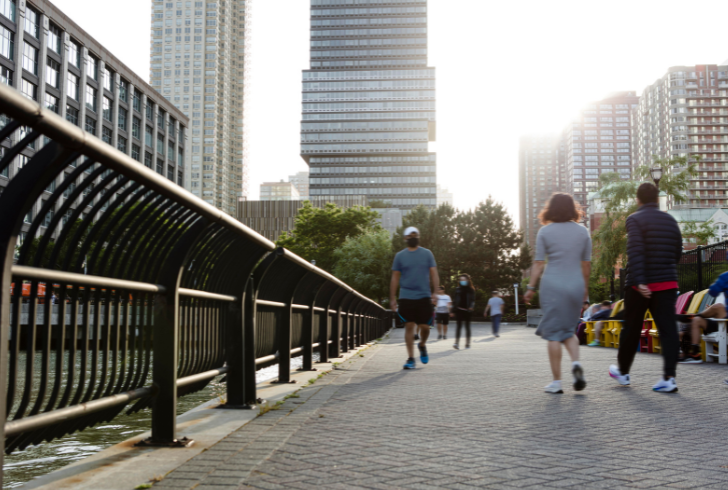
Freepik | Walkability and community access now outweigh the appeal of larger spaces.
Social factors also play a role. Rising loneliness has increased the value of places where people can gather and interact.
Economic conditions further influence behavior. With most Americans reporting reduced spending, value has become a key consideration in how people choose to spend their time and money.
Real estate that combines convenience, affordability, and community interaction attracts steady interest.
The Office Market Faces Structural Issues
Many discussions about the office sector center on remote work. While flexible work arrangements influence office demand, the deeper issue lies in the type of offices built over the past several decades.
Developers constructed vast amounts of low-to mid-quality suburban office inventory. These buildings prioritized scale and cost efficiency. They often sat inside isolated office parks, surrounded by large parking lots and far from housing or everyday amenities.
This development model worked when commuting was standard, and employees had little choice about where work happened. Conditions now differ.
By the end of 2025, suburban office vacancy rates reached a record 32.9 percent, highlighting the severity of the mismatch.
Workers increasingly look for locations that offer more than just a workspace—access to restaurants, nearby housing, public transit, and cultural activity all factor into that decision. Modern offices are also expected to provide reliable technology and services that make daily routines easier.
Buildings located in active, well-connected neighborhoods continue to hold their appeal. In contrast, office campuses that sit in isolation are finding it harder to stay relevant.
Selective Demand Shapes Modern Real Estate
Demand in real estate has not disappeared—it has become more targeted. Both individuals and businesses are drawn to spaces that offer connection, accessibility, and convenience in everyday life.
Community-focused developments tend to outperform more traditional setups. Retail spaces that blend shopping with social experiences attract consistent foot traffic. Many consumers now visit physical stores for the experience itself, rather than just to buy something. Online platforms have already made purchasing simple and efficient.
“Third places”—spaces outside the home and workplace—are becoming more valuable. Coffee shops, gyms, public plazas, and neighborhood stores create opportunities for casual interaction and connection. These environments not only support social life but also contribute to stronger local economies.
Mixed-use developments, where housing, offices, and public amenities exist within walking distance, often show stronger long-term performance compared to single-purpose properties.
A Development Model Built Around Cars
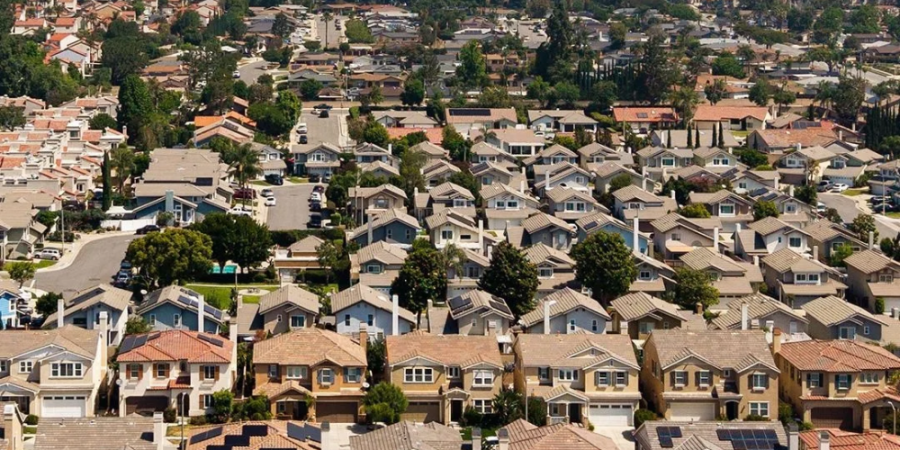
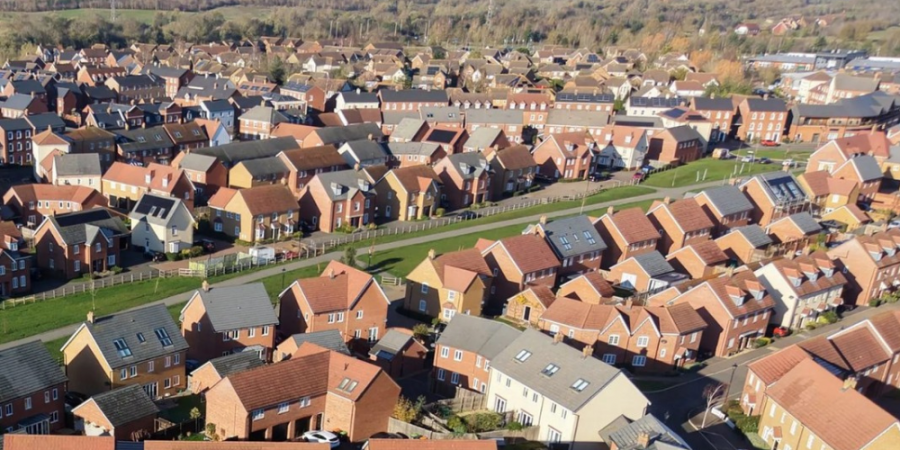
Much of the real estate built during the past 40 years followed a predictable formula. Housing spread outward into distant suburbs. Employment centers grew in separate zones. Retail often appeared as isolated buildings surrounded by parking lots. Office campuses rose in large suburban parks.
This model produced vast amounts of square footage. It also separated daily activities that once existed within the same neighborhoods.
The results remain visible today. Many properties remain structurally sound, yet they struggle to attract tenants or visitors. Their locations and design no longer fit current patterns of work, shopping, and social life.
Buildings that once seemed efficient now appear functionally outdated.
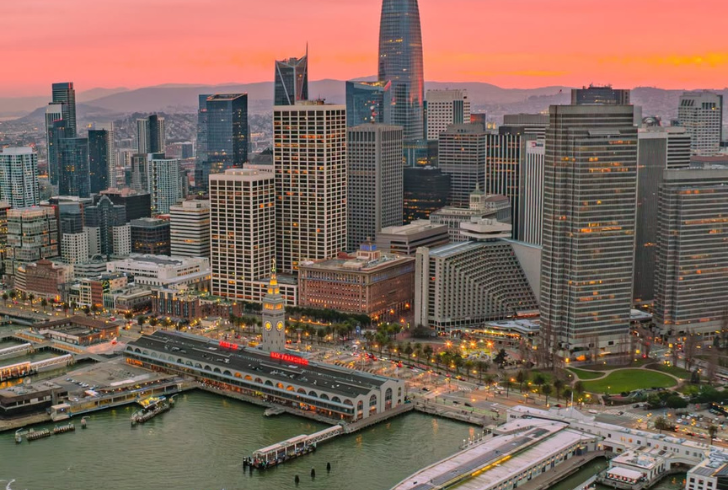
Instagram | californialove | Modern real estate has largely standardized a pattern of disconnected, sprawling suburban expansion.
Repurposing Real Estate for Modern Needs
Misaligned real estate inventory does not signal a permanent decline. Instead, it creates opportunities for redevelopment and adaptive reuse.
Across the country, underperforming properties present large areas of land and infrastructure ready for new purposes. Developers, cities, and investors increasingly explore ways to convert outdated spaces into assets that serve modern communities.
Examples include converting unused offices into residential units, rebuilding aging retail sites into mixed-use districts, and adapting empty properties to serve the services communities need.
Not every building will survive redevelopment. Market forces naturally shift land and capital toward stronger uses. Many properties still contain structural value that allows creative reinvention.
The Next Phase of American Real Estate
The notion that the country built too much real estate offers a simple explanation, implying that time alone will solve the problem. Evidence shows otherwise. Structural adjustments—zoning changes, redevelopment projects, and property repositioning—are already reshaping metropolitan areas.
Future success will depend on relevance rather than size. Developments that integrate housing, employment, retail, and social spaces in close proximity attract long-term interest. Environments designed around human activity—not just vehicle access—show stronger resilience.
Many properties were built for commuting patterns, work routines, and retail habits that no longer define daily life. People still gather, shop, work, and travel, but expectations now focus on accessibility, community interaction, and convenience. Buildings in active neighborhoods continue to perform well, while isolated developments struggle.
The next phase of real estate will rely on redevelopment, adaptive reuse, and thoughtful planning that aligns spaces with how people live today.